Wiring a Medellín apartment before you move in: a smart home guide for buyers from abroad
Bought an apartment in El Poblado, Envigado or Llanogrande and still abroad? What to finish while empty, what the building must approve, and what can wait.
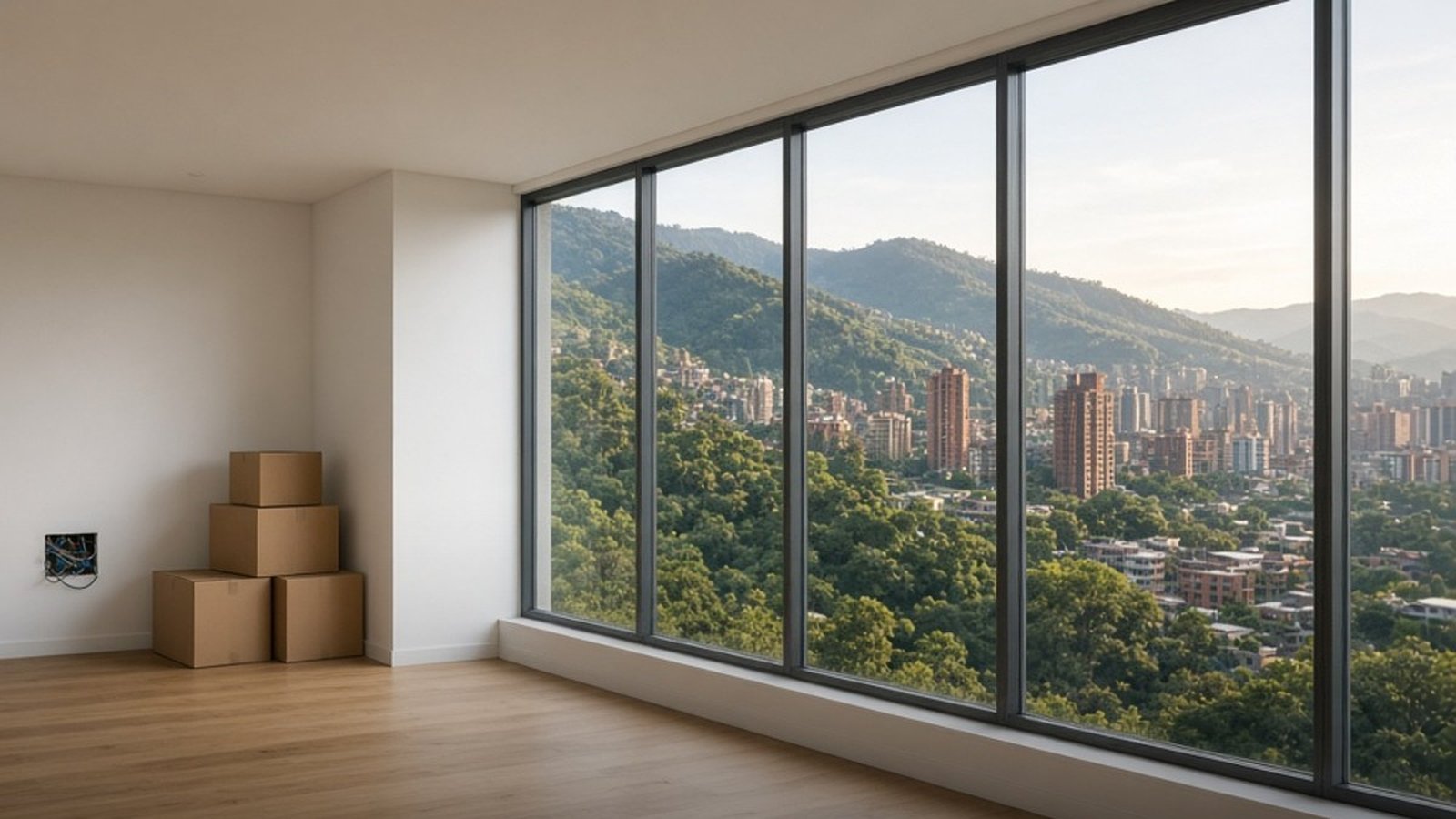
If you bought an apartment in Medellín and you're still living somewhere else, the weeks before you move in are the cheapest time to set up a smart home. The place is empty. Nobody has to work around your furniture, and if the unit still needs finishes or a renovation, the walls may still be open.
This guide is for buyers from abroad with a unit in El Poblado, Envigado, Las Palmas or Llanogrande, whether it's a new build waiting for handover or an older apartment getting renovated. It covers what to settle from a distance, what the building has to sign off on, and what is better left until you're living there.
What's different about an apartment in Medellín
A few things catch people coming from the US, Canada or Europe.
The building has a say. Almost every apartment here belongs to a propiedad horizontal, run by an administración. Changing the lock on the front door, touching the video intercom (citófono) or doing anything in common areas usually needs their written approval. Construction hours and access for contractors are set by the building too. Ask the administración for its renovation rules (manual de convivencia or reglamento de obras) before you plan anything.
Power is the same as North America. Colombia runs at roughly 110 to 120 volts and 60 Hz, with the same flat-pin plugs. Devices bought in the US usually work here. Many smart switches sold in Europe don't.
Power cuts happen. Most are short, but a cut while you're away can leave a fridge off or a router down. Our guide to power outages in Medellín explains the usual causes and how a house can tell you when the power comes back.
No central heating or ducted air. Most apartments rely on windows and ceiling fans, with a minisplit in the bedrooms if any. Hot water usually comes from a gas heater or an electric shower head, which is covered in hot water in Medellín.
Decide this before anyone starts working
You don't need to pick brands yet. You need a short written list of what you want the apartment to do, room by room, so the electrician or the builder can prepare for it:
- Which lights you want on dimmers or scenes.
- Which windows get motorized roller shades. Each one needs a power point at the top corner, next to where the motor goes.
- Whether the front door gets a smart lock, and whether the building allows it.
- Whether you want the water to shut off on its own if a sensor finds a leak. That depends on the main valve being reachable, as explained in water leak detection.
- Where the brain of the house lives: the router, a small Home Assistant server and the Zigbee coordinator. Pick a spot with outlets and some airflow, near the middle of the unit, not at the back of a closed closet.
Send that list to your architect or contractor in writing. A WhatsApp voice note gets lost. A one-page list attached to the plans doesn't.
The electrician's list
If walls or ceilings are still open, these are the things that are hard to add later:
- A neutral wire in every switch box, not just some of them. Most smart switches need it.
- Switch boxes a little deeper than standard, because smart switches are bulkier.
- A power point above every window that will get a motorized shade.
- Network cable from the router spot to the living room, the office and every TV, plus an empty conduit to the hallway ceiling for a Wi-Fi access point.
- Spare slots in the breaker panel.
- A main water valve you can reach, with room for a motorized valve next to it.
Ask for an updated electrical plan at the end that shows all of it. Whoever works on the apartment years from now will need it.
If the unit is already finished and you don't plan to open walls, most of this still works with wireless devices. It just takes more planning around where the existing boxes and outlets are.
Running it from abroad
Being in another country during the work is common, and it's manageable if you plan for it.
Get a scan or a floor plan you trust. Plans from the builder don't always match what got built. A 3D scan of the apartment gives you real measurements and lets you check, from wherever you are, where a switch or sensor will end up.
Have one person on site who answers for the prep. Usually that's the electrician or the maestro de obra. Ask for photos of each open wall, with the boxes and cables visible, before anyone closes it. Photos are cheaper than a second trip.
Keep the router and the hub on a backed-up outlet. If you want to check on the apartment while you're away, the internet connection is the weak point during a power cut. A small UPS for the router and the hub keeps alerts coming in.
Start with the sensors that protect an empty apartment. A leak sensor under the kitchen sink, the washing machine and each water heater, a door sensor on the front door, and power monitoring on the main panel tell you most of what you need to know while nobody is living there.
What can wait until you arrive
Nearly everything else. Smart switches, motion sensors, shade motors, the lock and scene programming all go in once the paint is dry and the door frames are adjusted. If the prep work is done, none of it needs a hammer.
Waiting has another upside. Once you live in the place, you know when the afternoon sun hits the living room and where you actually sit at night. Scenes designed after a few weeks of living there end up better than ones guessed from a floor plan.
How we can help
We work in Spanish and English. We can review the plans with you remotely, write the electrician's list, talk to your architect or the building's administración, and send you photos of the prep before the walls close. Once you've moved in, we install and program the apartment in phases.
If you're buying off-plan, our guide to smart homes in new builds (in Spanish) goes through the builder's timeline. The one on full renovations (in Spanish) covers older units.
For an overview of how we work in the city, read home automation in Medellín. To see how ready your place is, take the smart home quiz.