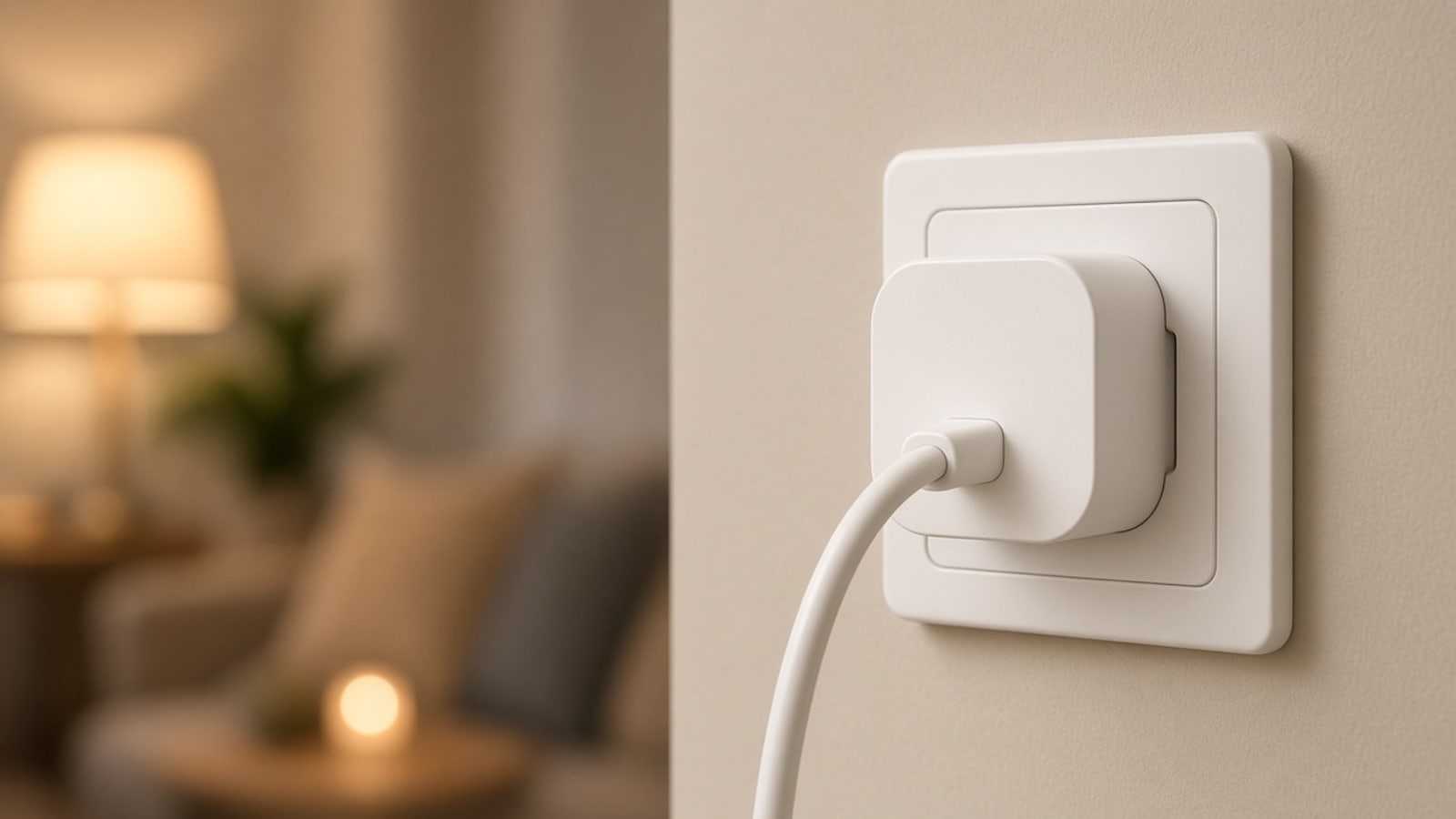
Smart plug: control the appliance and see how much it uses
What a smart plug is for in a Medellín home, how to use it to measure consumption per appliance, and why it fits with panel monitoring.
A smart plug looks like a minor accessory: you put it between the outlet and the appliance, and you can already turn it off from your phone. Chosen well, it does more than that. It measures how much that device uses, strengthens the home network, and lets scenes cut what shouldn't stay on when you leave.
At Domótica Medellín we use it as a pointed piece of the energy map. The panel tells you which circuit is heavy; the smart plug tells you which appliance on that circuit. The two complement each other. The full panel picture is in electricity consumption monitoring.
What it is, in practice
It's a module that goes in the outlet (or replaces the faceplate, depending on the model) and controls the current that reaches the appliance. From your app you can turn it on, turn it off, schedule it, or tie it to a scene. The ones we care about also report power and energy: watts right now and accumulated kilowatt-hours.
It doesn't replace a breaker. It isn't for loads that need a poorly done fixed install. It's for appliances that already live in an outlet: dehumidifier, utility-room fridge, audio rack, table heater, printer, chargers, a floor lamp.
What we actually use it for
See the consumption the panel doesn't separate
In many Medellín apartments several appliances share the same outlet circuit. A clamp on the breaker gives you that circuit's total. A smart plug on the old utility-room fridge tells you whether that fridge is the culprit of the base load at three in the morning.
That changes decisions. You replace the appliance, adjust the schedule, or turn it off when it isn't needed—with a number in front of you, not a suspicion.
Cut what stays in "standby"
TVs, consoles, chargers, and desk power supplies keep using power when half-off. With a smart plug on the study power strip, "away" or "good night" mode cuts that group at once. The next day you turn it back on with the same arrival scene.
Turn on only when needed
A dehumidifier in the closet or a fan in the utility room can live on a smart plug tied to a humidity or temperature sensor. It turns on when the room asks for it and off when things return to normal. The same pattern works for a small water heater or an auxiliary pump, always within the load the plug can handle.
Repeat the mesh network
A Zigbee or Thread plug connected to power normally acts as a repeater. Each one you place near battery sensors (doors, windows, leaks) opens a more reliable path to the server. That matters in long apartments or thick walls. We cover it in Zigbee and Thread.
What we check before recommending one
Not every smart plug in an ad will do. We review:
- Real metering. That it reports power and energy, not only on/off.
- Open protocol. Zigbee, Matter over Thread, or clear local integration. If it only lives in the brand's cloud, we don't leave it as a critical piece.
- Load capacity. That it handles the appliance with margin. A window AC or a large heater doesn't go on an improvised tabletop plug.
- Contact quality. In Medellín there are old outlets and new ones; the module has to sit firm without overheating.
- Privacy and local. The command to turn off shouldn't depend on the manufacturer's server being up.
If the appliance is a high load or the circuit is doubtful, the right path is the panel and an electrician—not forcing a plug.
Smart plug and panel monitoring
The combination that gives the most clarity is this:
- Clamps or metered breakers on the service and on the heavy circuits (heater, ACs, kitchen).
- Smart plugs with metering on doubtful appliances or ones you want to cut by scene.
That way you see total consumption, each heavy circuit, and loose appliances. When you compare before and after a change, you know if it helped. When base load rises, you know where to start looking.
Panel monitoring remains the skeleton. The smart plug is the zoom. Together they feed the same app, with your names ("Utility fridge," "Study rack"), without a separate subscription per brand.
How we do it in your home
On the visit we list outlets and appliances that are always plugged in. We measure or estimate loads. We define which need only control, which metering, and which both. We integrate the plugs into the mesh network and into scenes: away, night, travel, arrival.
If you already have plugs from a brand that speak an open protocol, we add them. If they only obey their cloud app, we replace them with ones that cooperate. The goal is the same as for the rest of the house: control and data live with you.
A well-placed smart plug doesn't show off. You notice it when you stop paying for gear nobody was using, and when the house cuts that load on its own as you leave. If you want us to review your case in Medellín, write to us from the site.